

Vroeg of laat reserveert hij een mooie plek — het soort restaurant met drie glazen per couvert, een wijnkaart als een roman en personeel dat geluidloos beweegt. Zulke avonden laten een connectie echt zien, want aan een kleine tafel is er nergens om je te verstoppen: je gesprek, je gemak, je manieren — alles ligt open en bloot. Het goede nieuws is dat niets hiervan moeilijk is. Het zijn gewoon een aantal conventies die niemand je ooit heeft geleerd, en zodra je ze kent, denk je er helemaal niet meer over na.
Laten we echter duidelijk zijn over het doel van dit leren. Het gaat er niet om een voorstelling te geven voor iemand, of jezelf te transformeren tot een braaf accessoire. Dit zijn dingen die je overal kunt gebruiken: een goed restaurant, de bruiloft van een vriend, een zakelijk diner, een doop. Leer ze eenmaal en ze zijn voor altijd van jou, lang na elke specifieke relatie.
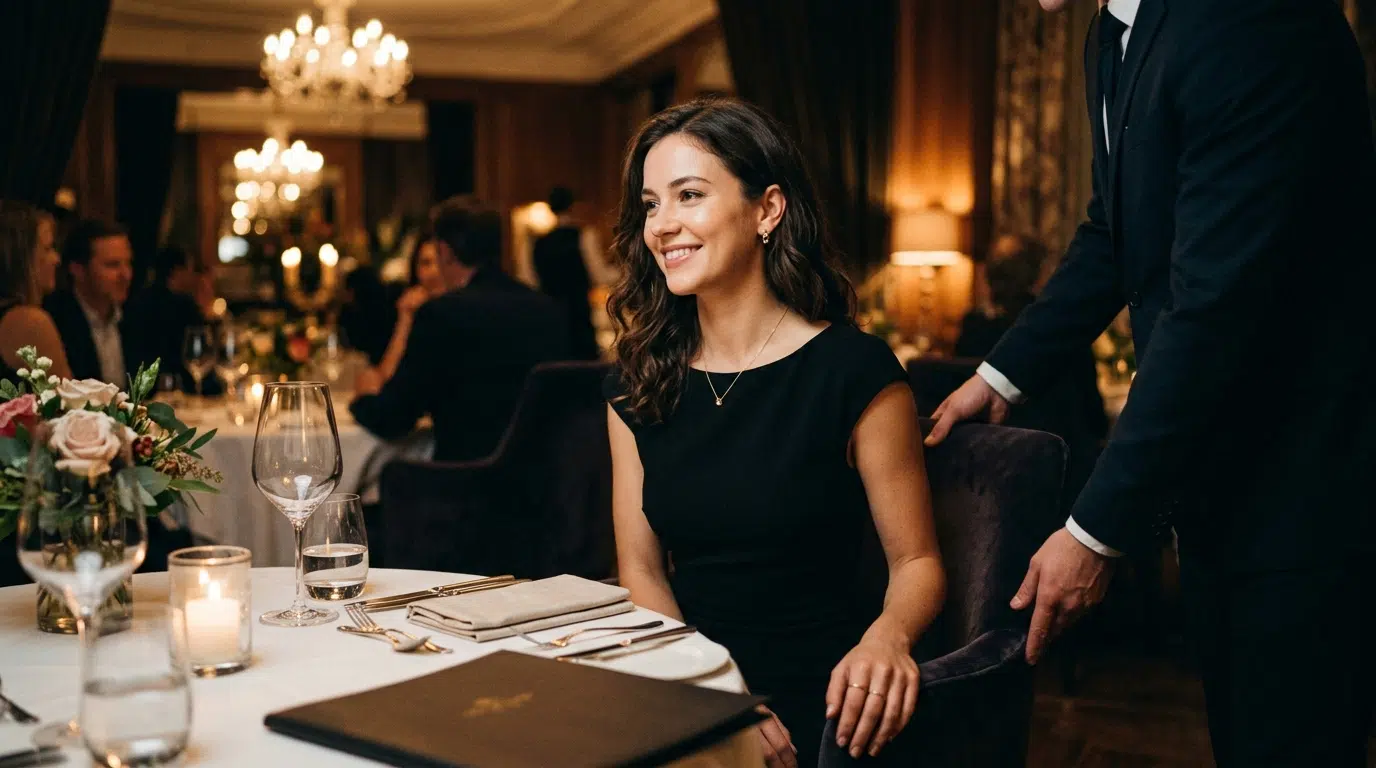
De tafel lezen voordat je gaat zitten
De eerste blik op een formele tafelsetting is het ontmoedigende deel: te veel bestek, een rij glazen, een gevouwen servet dat iets architecturaals doet. Het is allemaal logisch, en twee trucs ontcijferen bijna alles.
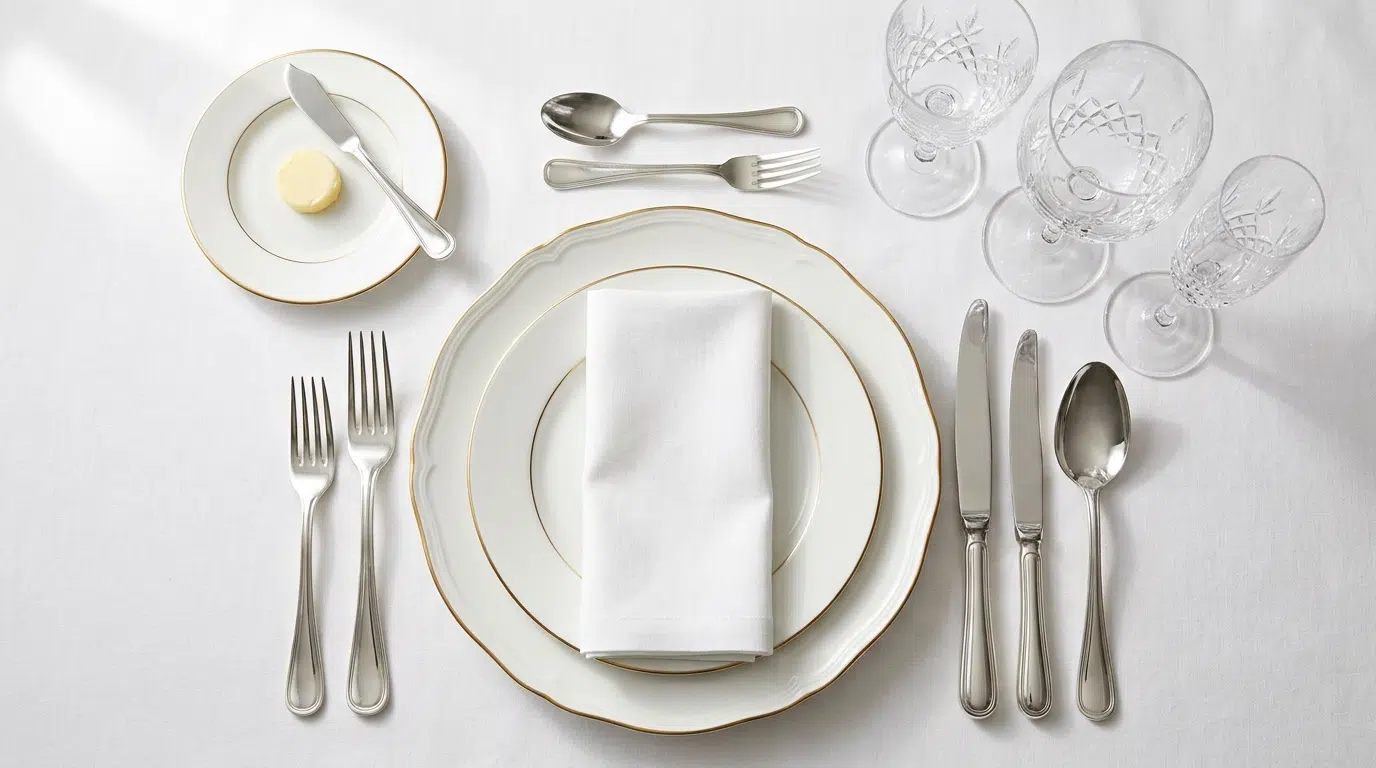
Werk van buiten naar binnen. Bestek wordt neergelegd in de volgorde waarin je het gebruikt, dus de buitenste vork en het buitenste mes horen bij het eerste gerecht en je werkt met elke gang verder naar binnen. Als er een kleine, ietwat vreemd uitziende vork en een bot mes met een breed blad verschijnen, is dat voor het visgerecht — ze hebben die vorm om vlees van het bot te lichten in plaats van het te snijden.
En onthoud dat brood aan je linkerhand staat en drinken aan je rechterhand. Het klassieke ezelsbruggetje is BMW — Bread, Meal, Water, van links naar rechts — wat je behoedt voor de meest gemaakte fout aan een drukke tafel: het pakken van het broodje van je buurman of, erger nog, zijn wijn.
De glazen zelf staan boven het mes aan je rechterkant, gerangschikt in de volgorde waarin ze worden gebruikt, en elke vorm heeft daar een reden voor.
| Glas | Hoe het te herkennen | Waarom het die vorm heeft |
|---|---|---|
| Waterglas | De grootste, het dichtst bij u, net boven het tafelmes | Water wordt tijdens de hele maaltijd gedronken, dus dit glas bevat het meest |
| Rode wijn | Ronder, met een brede kelk | De extra ruimte laat de wijn ademen en zijn aroma's vrijgeven |
| Witte wijn | Kleiner en meer U-vormig dan het rode wijnglas | Een nauwere kelk helpt de wijn gekoeld te houden |
| Champagneflûte | Lang en smal | Behoudt de bubbels en laat ze opstijgen |
| Cognac of brandewijn | Korte steel, ronde ballonkelk | In de hand gehouden zodat uw warmte het aroma vrijgeeft |
Eén detail dat u meteen kunt overnemen: houd een wijnglas bij de steel, niet bij de kelk. Uw hand is warm en de wijn is op een bepaalde temperatuur bij u gebracht — het vasthouden van de kelk doet dat binnen een minuut teniet. De cognacballon is de bewuste uitzondering, omdat daar de warmte juist het doel is.
De stille taal van je bestek
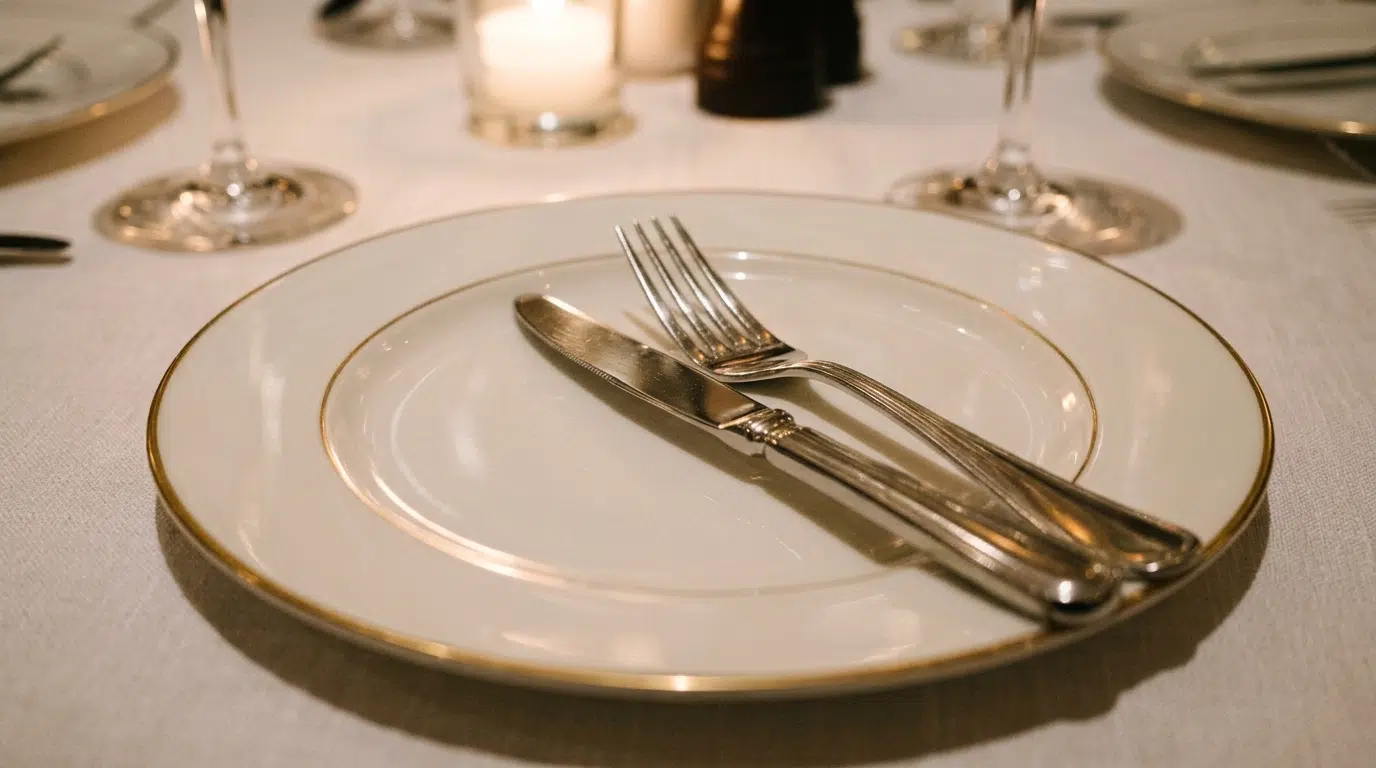
Dit is wat bijna niemand weet, en het is het nuttigste onderdeel van dit artikel. Bij formele bediening is de positie van uw mes en vork op het bord een boodschap aan het personeel. Het heet de stille servicecode, het wordt onderwezen op elke serieuze hotelschool, en het bestaat zodat een ober uw gesprek nooit hoeft te onderbreken om te vragen of u klaar bent.
Zodra u het weet, wordt uw bord niet meer midden in een gesprek weggehaald — en zit u niet meer twintig minuten voor een leeg bord omdat niemand het kon zien.
| Waar u ze neerlegt | Wat het personeel hieruit opmaakt |
|---|---|
| Gekruist, of in een omgekeerde V | “Ik pauzeer — neem mijn bord nog niet weg” |
| Naast elkaar, parallel, wijzend naar ongeveer vier uur | “Ik ben klaar, u kunt afruimen” |
| Na een gang netjes naast elkaar neergelegd | “Klaar voor het volgende” |
En één kleine regel die daarbij hoort: zodra bestek gebruikt is, gaat het nooit meer terug op het tafelkleed. Het blijft altijd in uw hand of op uw bord — wat ook het linnen spaart, en dat is de reden waarom de regel bestaat.
Het wijnritueel, eindelijk uitgelegd
Dit veroorzaakt meer stille paniek dan wat ook aan tafel, en het berust op een misverstand dat vrijwel iedereen deelt.
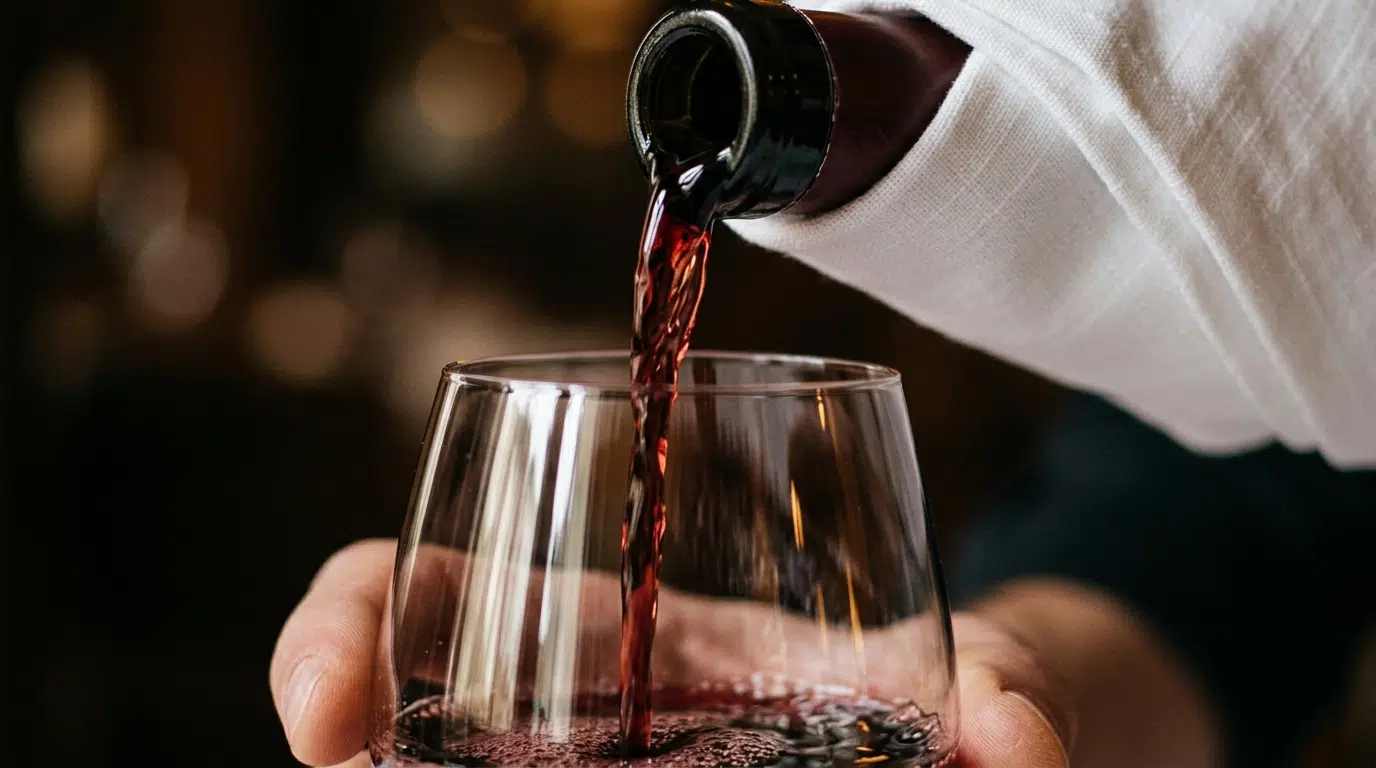
Wanneer de fles gebracht wordt, krijgt u eerst het etiket te zien — kijk er goed naar, want knikken naar het etiket is het ongeschreven moment waarop u de fles accepteert. Vervolgens wordt een kleine hoeveelheid ingeschonken om te proeven, en dit is wat niemand uitlegt: er wordt u niet gevraagd of u het lekker vindt. Die beslissing werd genomen bij het bestellen. U controleert slechts één ding — of de wijn gebrekkig is, doorgaans “kurksmaak”, wat onmiskenbaar ruikt naar vochtig karton of een muffe kelder. Als dat het geval is, zeg het dan beleefd maar beslist en de fles wordt vervangen. Als de wijn simpelweg niet naar uw smaak is, is dat geen reden voor een nieuwe fles.
Twee extra tips die u goed van pas komen. Als de kurk naast u wordt neergelegd, hoeft u er niet aan te ruiken — dat ritueel is puur theater, zonder enige wetenschappelijke basis, en de wijn in uw glas vertelt u veel meer dan een stukje doorweekte kurk ooit zal doen. Laat het op tafel liggen. En als de fles een schroefdop heeft, wordt er meestal helemaal niet geproefd, omdat wijn die zo is afgesloten geen kurksmaak kan hebben — dus als er een fles met schroefdop wordt gebracht en niemand biedt u een proefje aan, is er niets vergeten.
En wanneer uw glas wordt ingeschonken: laat het precies staan waar het staat. Het glas naar de fles toe tillen is een goedbedoeld instinct dat het werk van de sommelier moeilijker maakt.
De kleine details die het moeiteloos maken
Naast de tafelschikking zijn er een aantal gewoonten die u goed kunt onthouden. Geen enkele is moeilijk, en zodra ze tweede natuur zijn, denkt u er helemaal niet meer aan — en dat is precies de bedoeling.
Til de menukaart niet van tafel. Open hem waar hij ligt, lees hem daar, en weersta de neiging om met uw vinger naar een gerecht te wijzen — als u een vraag heeft, beschrijf het gerecht in plaats van ernaar te wijzen. Zo gaat men nu eenmaal om met menukaarten in een formele zaal.
Klink niet met glazen. Goed kristal is breekbaar en kostbaar, en in een stille eetzaal klinkt het geluid als een autoalarm. Hef uw glas, maak oogcontact, en drink. Het oogcontact is de hele toast.
Drink elke keer op dezelfde plek. Als u het glas ronddraait, ontstaan er vlekken langs de hele rand; door op één punt te blijven houdt u het glas de hele maaltijd schoon. Stel een verzorgd sugar baby-profiel samen en een sugar daddy die de etiquette waardeert, neemt u mee naar een plek die het waard is.
Servet op schoot, discreet opengevouwen, zodra je gaat zitten. Nooit met een zwierig gebaar opengeschud. Als je tijdens de maaltijd opstaat, laat het dan losjes op je stoel liggen — dat is het signaal dat je terugkomt. Aan het einde van de avond leg je het zacht gevouwen op tafel, zodat eventuele vlekken aan de binnenkant zitten; niemand wil jouw lippenstift op het linnen zien.
Brood wordt gebroken, nooit gesneden of afgebeten. Breek telkens één stukje af, beboter alleen dat stukje, en eet het op voordat je het volgende afbreekt. En doe eerst wat boter op je eigen broodbord in plaats van steeds terug te gaan naar de gedeelde schaal. Daar zit een praktische reden achter: zo blijven de kruimels beperkt en blijft de gedeelde boter onaangeraakt door ieders mes.
Niets persoonlijks op tafel. Niet je sleutels, niet je tas, niet je zonnebril. Een handtas gaat op schoot, aan het haakje onder de tafel als dat er is, of op het kleine krukje dat goede restaurants hier speciaal voor neerzetten. Alles op het linnen betekent dat het personeel de hele avond om je heen moet werken.
Dep je lippenstift voor de eerste slok. Een korte druk met je servet zodra je gaat zitten, zorgt ervoor dat je geen afdruk achterlaat op elk glas — een klein detail, en iets wat vrouwen die regelmatig uit eten gaan vaak onbewust doen.
En een noot over de uitdrukking waar mensen zich zorgen over maken: in het formele Europese dineren wordt het iedereen aan tafel een smakelijke maaltijd toewensen over het algemeen aan het personeel overgelaten. Een warme glimlach en gewoon beginnen zodra iedereen geserveerd is, volstaat prima.
Dit alles gaat er niet om iemand onder de indruk te brengen. Het gaat erom dat je er niet over na hoeft te denken — want zodra de tafel geen puzzel meer is, ben je vrij om daadwerkelijk van de avond te genieten.
De telefoon blijft van tafel
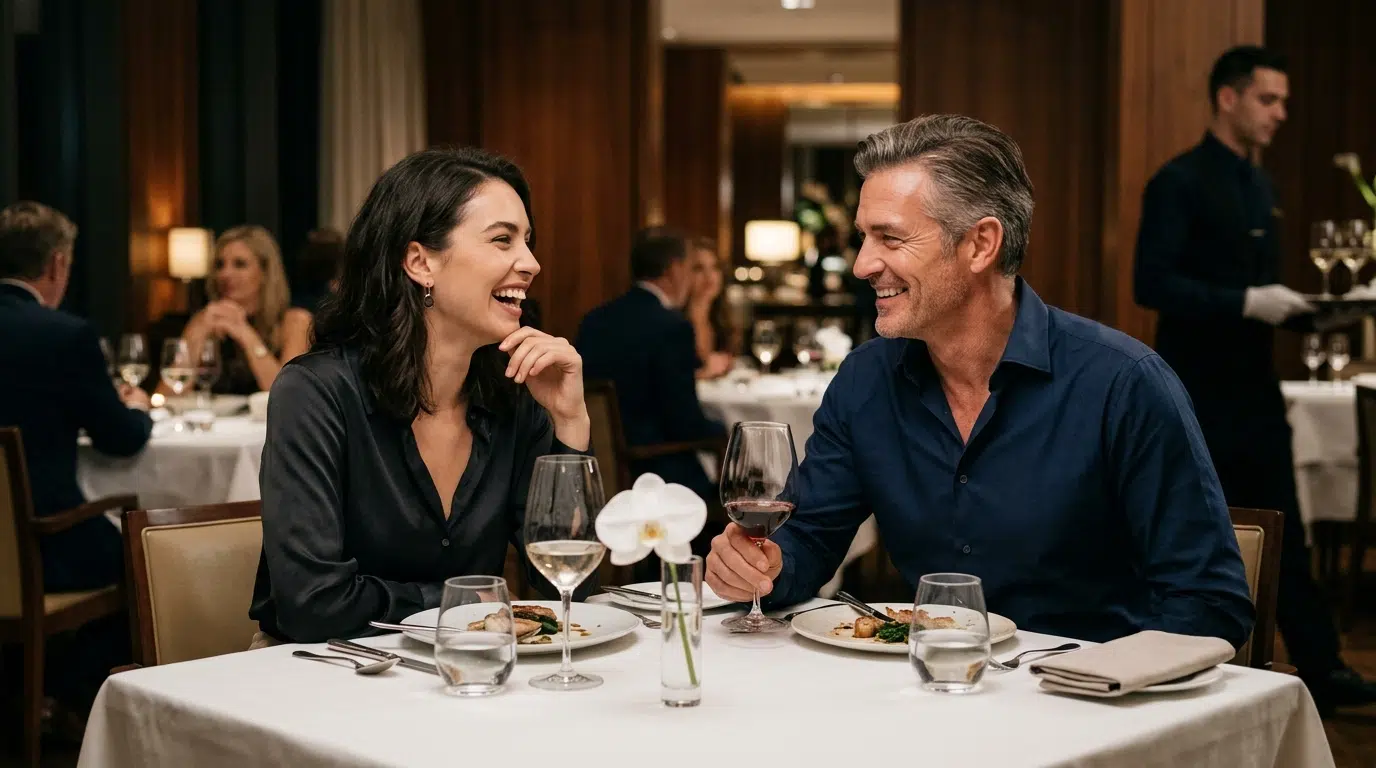
Dit is het belangrijkste, en het gaat eigenlijk niet om etiquette. Iemand heeft ruimte gemaakt in een veeleisend leven voor deze avond, en een telefoon die met het scherm naar boven tussen jullie ligt, zegt zonder woorden dat je half ergens anders bent. Leg hem dus weg. In je tas, je zak, ergens uit het zicht — en laat hem daar. Niet tussendoor checken. Niet even scrollen terwijl hij praat.
De beloning is groter dan goede manieren. Volledige, onverdeelde aandacht is opmerkelijk zeldzaam, zeker voor een man wiens dag bestaat uit een rij mensen die iets van hem willen. Geef het oprecht, en je zult onvergetelijker zijn dan welke jurk ook ooit zou kunnen.
Een gesprek voeren dat de moeite waard is
Etiquette is kennis, en kennis kun je op een middag opzoeken. Conversatie is de echte vaardigheid, en dat is wat hij zich zal herinneren.
Begin met oprechte interesse, want die is niet vol te houden over drie gangen als die er niet is. Als je hem niet interessant vindt, zal geen enkele techniek de avond redden — en eerlijk gezegd zou je er dan niet moeten zijn. De beste voorbereiding is van tevoren goed met elkaar gepraat te hebben, online of via berichten, zodat je aankomt met draden om op verder te borduren in plaats van een blanco pagina. Onze gids over gesprekken goed beginnen behandelt die voorbereiding.
Houd het vervolgens luchtig, zeker in het begin. Bewaar politiek en zware onderwerpen voor wanneer je elkaar beter kent; een eerste diner vraagt om warmte en humor, niet om een debat. En houd het in balans — een gesprek waarbij één persoon de ene vraag na de andere beantwoordt, houdt op een gesprek te zijn en wordt een interview. Deel ook iets van jezelf tussen elke vraag die je stelt.
Een sugar baby in Bordeaux vertelde me dat ze haar eerste fine-dining avond zo gefocust was op het goed gebruiken van elke vork dat ze nauwelijks sprak, en het geheel een fiasco werd. De tweede keer leerde ze van tevoren de basis, vergat die tijdens het diner volledig, en praatte gewoon. Díe avond, zei ze, was de avond die ertoe deed. Interessant zijn zal altijd zwaarder wegen dan perfect zijn — wat eigenlijk de kern is van waar het opvallen tussen andere sugar babies op neerkomt.
Hij is ook zenuwachtig, weet je
Het is de moeite waard dit duidelijk te zeggen, want het verandert hoe de avond aanvoelt. Een man die een jongere vrouw meeneemt naar een chique gelegenheid is er vaak stilletjes bezorgd over — of hij interessant overkomt, of hij je verveelt, of het leeftijdsverschil ongemakkelijk zal voelen zodra de wijn er is. Hij kan bedrijven leiden met volledig zelfvertrouwen en toch een beetje zijn draai niet vinden tegenover jou aan tafel.
Dat weten is vreemd genoeg bevrijdend. Je auditioneert niet voor een jury; jullie zijn twee mensen die allebei willen dat de avond goed verloopt en er allebei een beetje zenuwachtig over zijn. Warmte is wat dat oplost, aan beide kanten, sneller dan wat ook.
Je kleden voor de gelegenheid
Elke gelegenheid heeft zijn eigen sfeer, dus stem je outfit af op de plek en niet op een algemeen idee van “chic” — en als je twijfelt, neemt onze gids over dresscodes voor elke gelegenheid het giswerk weg. Het loont ook om te letten op hoe hij zich kleedt. Een man die op een motor arriveert en een man die in een Mercedes arriveert, bewonen verschillende werelden, en aansluiten bij zijn stijl maakt jullie allebei op je gemak.
Verder geldt het klassieke advies: make-up ingetogen en elegant, met een gedurfde lip bewaard voor de gelegenheden die dat verdienen. Jeans, en zeker alles met scheuren of iets sportiefs, horen bij een ander soort avond, hoe modieus ze ook zijn. En wat je ook kiest, draag het — en laat het jou niet dragen. Een outfit die je de hele avond zit te fatsoeneren, houdt je de hele nacht bezig.
Dankbaarheid, discretie en weten wanneer je iets niet moet vragen
Twee laatste gewoonten doen meer voor een avond dan welke regel over bestek dan ook.
De eerste is oprechte waardering. Merk de moeite op — de tafel die hij heeft gekozen, de wijn die hij heeft uitgekozen, de gedachte erachter — en zeg het, één keer, hartelijk. Breid het ook uit naar de omgeving: bedank het personeel, wees vriendelijk voor de ober. Hoe je iemand behandelt die niets voor je kan doen, zegt meer over jou dan wat dan ook op de menukaart, en mannen merken het veel meer dan vrouwen verwachten. Die warmte geef je makkelijker aan de juiste match, en een afgerond sugar baby-profiel is wat je aan de andere kant van de tafel zet, tegenover een sugar daddy die de goede tafel reserveert.
De tweede is discretie. Nieuwsgierigheid is natuurlijk bij iemand met ervaring en interessante verhalen, maar er is een grens tussen een gesprek en een verhoor. Laat hem zijn verleden, zijn werk en zijn familie in zijn eigen tempo delen in plaats van het uit hem te trekken — als hij ergens omheen gaat, volg hem dan zonder commentaar. Die terughoudendheid wekt meer vertrouwen dan welke vraag ook had kunnen beantwoorden, en het is een groot deel van wat hem uiteindelijk doet openbloeien. Het is ook de manier waarop deze verbindingen uitgroeien tot iets dat meer weg heeft van echte mentorschap dan een prettige avond die nergens heen leidt.
Het echte geheim
Leer dit alles eenmalig en vergeet het dan, want het ging nooit om de regels. De meest indrukwekkende persoon in een chic restaurant is niet degene die etiquette opvoert. Het is degene die er duidelijk niet over nadenkt — ontspannen, grappig, volledig zichzelf — en die toevallig haar glas bij de steel vasthoudt zonder te merken dat ze het doet. Dat gemak is waar het om gaat. En het komt voort uit kennis, niet uit zenuwen. Voor meer over hoe je jezelf goed presenteert in elk onderdeel hiervan, zijn onze volledige sugar baby gids en ons overzicht van wat het zijn van een sugar baby inhoudt beide de moeite waard.
Restaurantetiquette: FAQ
Waarom zijn tafelmanieren zo belangrijk?
Minder omdat iemand je beoordeelt, en meer omdat het kennen van de conventies je bevrijdt van erover nadenken. Iemand die zich geen zorgen maakt over welke vork hij moet gebruiken, is ontspannen, aanwezig en aangenaam gezelschap. Het gaat ook ver voorbij sugar dating: een zakendiner, de bruiloft van een vriend, een doopfeest, elk restaurant dat de reservering waard is.
Hoe weet ik welk glas welk is?
Ze staan boven de messen aan je rechterkant, in volgorde van gebruik. Het waterglas is het grootst en staat het dichtst bij je; het rode wijnglas heeft een rondere, bredere kelk zodat de wijn kan ademen; het witte wijnglas is kleiner en meer U-vormig om het koel te houden; de champagnefluit is lang en smal. Houd elk wijnglas bij de steel vast zodat je hand het niet opwarmt.
Hoe geef ik aan dat ik klaar ben zonder iets te zeggen?
Gebruik de stille servicecode. Mes en vork gekruist links, of in een omgekeerde V, betekent “ik pauzeer, haal mijn bord alstublieft niet weg”. Naast elkaar gelegd en parallel, wijzend naar ongeveer vier uur, betekent dat je klaar bent en dat ze het mogen meenemen. Het bespaart de ober van het onderbreken van je gesprek, en het voorkomt dat je bord verdwijnt terwijl je nog aan het eten bent.
Waar let ik eigenlijk op als ze me een proefslokje wijn inschenken?
Alleen of de wijn gebrekkig is — niet of je hem lekker vindt. Die keuze werd gemaakt toen je bestelde. Je let op kurksmaak, die ruikt naar vochtig karton of een muf kelderluchtje; als je dat vindt, zeg het dan beleefd en ze vervangen de fles. Je hoeft niet aan de kurk te ruiken, en bij schroefdopwijnen wordt het proeven meestal overgeslagen omdat ze geen kurksmaak kunnen hebben.
Waarover moet ik het beter niet hebben?
Houd een eerste diner luchtig en hartelijk. Bewaar politiek en zware onderwerpen voor wanneer je elkaar goed kent. Maak er ook geen sollicitatiegesprek van — vertel ook iets over jezelf tussen de vragen door, en dring niet aan op zijn verleden, werk of familie als hij ergens omheen gaat. Laat hem in zijn eigen tempo delen.
Hoe moet ik me kleden voor een chic restaurant?
Stem het af op de gelegenheid en neem een hint aan hoe hij zich kleedt. Elegant en ingetogen werkt bijna overal: een goed gesneden jurk, discrete make-up, een gedurfde lippenstift alleen als de gelegenheid erom vraagt. Sla spijkerbroeken over, alles met scheuren en alles sportiefs, hoe modieus ook. Draag bovenal iets wat je niet constant hoeft te fatsoeneren.
Waarom is het gebruik van mijn telefoon zo'n probleem?
Omdat het aangeeft dat je half ergens anders bent, terwijl hij ruimte heeft gemaakt in een veeleisend leven voor deze avond. Houd hem volledig uit het zicht in plaats van met de scherm naar beneden op tafel, en check hem niet tussen de gangen door. Volledige aandacht is zeldzaam en oprecht onvergetelijk — het doet meer voor je dan wat je die avond ook maar zou kunnen doen.
Wat als ik zenuwachtig ben?
Bedenk dat hij het waarschijnlijk ook is. Mannen die een jongere vrouw naar een grand restaurant meenemen, maken zich vaak zorgen of ze interessant genoeg zijn of dat het ongemakkelijk zal aanvoelen. Als je de basisprincipes van tevoren leert, verdwijnt het grootste deel van de angst, en daarna is het enige wat helpt warmte — vriendelijk en nieuwsgierig zijn stelt jullie beiden sneller op hun gemak dan perfecte techniek ooit zou kunnen.




2 reacties:
COQUINETTE
23 juli, 2026 op 12:41 pm
top conseils
Tonirunning10
24 juli, 2026 op 12:03 pm
Muy interesante