

Having someone who supports you can make life a great deal easier — more free time, fewer worries, room to focus on your studies or your goals. But here’s the part worth keeping in mind: life moves on. Your sugar daddy is a person with his own world, and one day your paths may simply take different directions. This guide is about making sure that if that happens, you’re absolutely fine — with real, grown-up advice on managing your money, saving, and investing to build a sense of security that’s yours and yours alone.
None of this is about being pessimistic. It’s the opposite. The women who thrive in this lifestyle — and if you’re new to it, it’s worth understanding what sugar dating really involves first — are usually the ones who feel calm about the future, because they’ve quietly built a floor under themselves. Turning a comfortable present into lasting security is what gives you real freedom — including the freedom to choose what you want your life to look like, on your own terms.
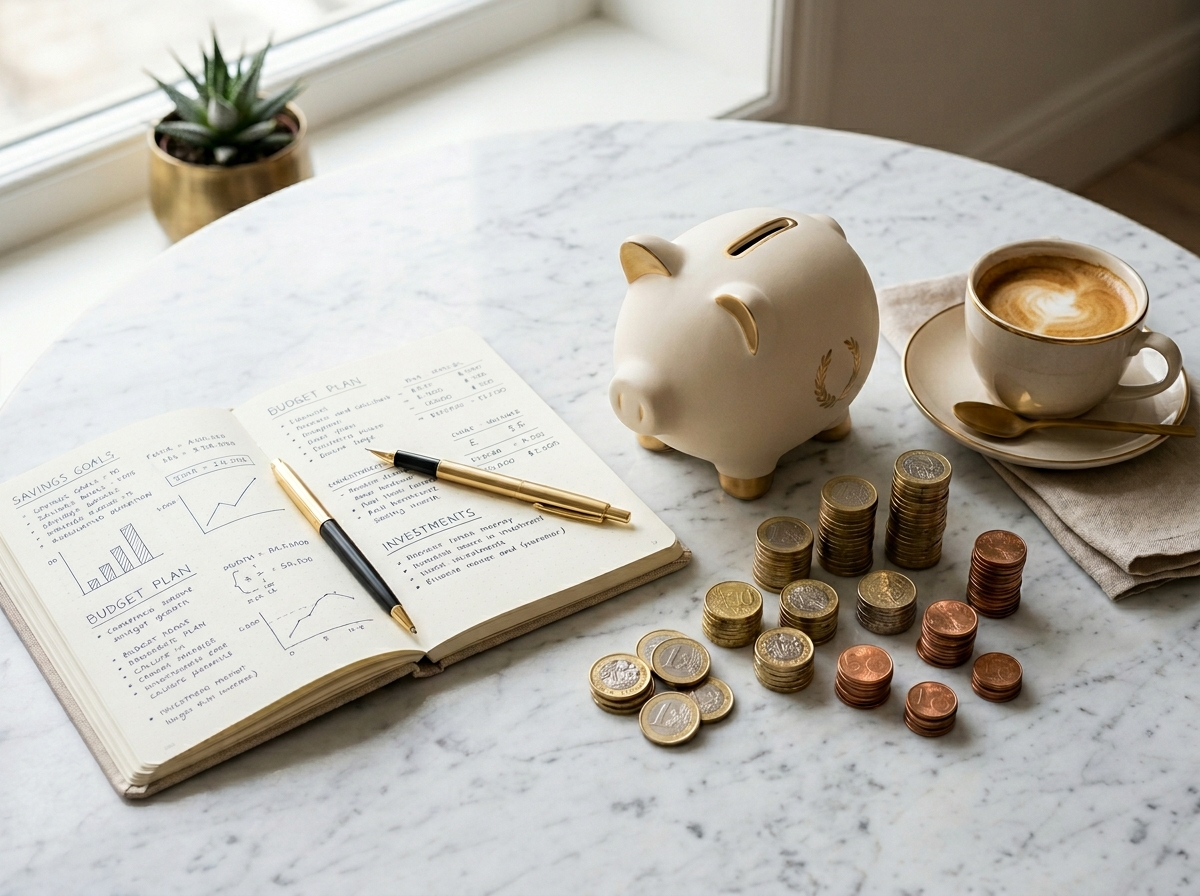
Keep your fixed costs low — especially rent
When life gets more comfortable and there’s more room in your budget, the temptation is immediate: the bigger flat, the nicer postcode, the place with the pool. It’s the single most common mistake, and it’s the most dangerous, because rent is the one cost you can’t switch off quickly. If your situation changes, an expensive lease doesn’t change with it — and going from a beautiful apartment to a cramped shared flat in a hurry is exactly the kind of upheaval you want to avoid.
So treat your rent as if you were covering it entirely on your own. A widely used budgeting benchmark is to keep housing at no more than around a third of your income — and it’s wise to measure that against what you could comfortably manage by yourself, not against your best month. A modest studio or a one-bed in a decent-but-not-flashy area is plenty. The reward isn’t just lower risk; it’s the calm of knowing that whatever happens, you could carry on living exactly as you do now for many months without panicking. That feeling is worth more than the postcode.

Spend on things that hold their value
Treating yourself is fine — everyone does it, and you should. The trap is confusing looking after yourself with spending like there’s no tomorrow. They’re not the same thing, and your future self can tell the difference.
A useful filter when you shop: will this still be working for me in a year? Some purchases quietly pay you back. A well-cut blazer or a simple dress you can wear to an interview, an event, or a dinner; a good coat; a piece of classic, understated jewellery — these get used again and again and they help you show up well in rooms that matter for your future (the same polish that helps when you’re putting together a standout dating profile). Compare that to a logo handbag or designer sunglasses, which mostly buy a moment of vanity and lose half their value the second you leave the shop.
If you genuinely love a luxury piece, there’s a smarter route than dipping into your own savings, and it’s the next section.

Low fixed costs
Keep rent and recurring bills modest, measured against what you could comfortably manage on your own. It’s the one expense you can’t switch off fast, so it’s the one that protects you most.
An emergency fund
Three to six months of essential expenses, kept in cash you can reach instantly. This is the safety net that turns any change of chapter into something manageable instead of stressful.
Long-term growth
Once the cushion’s in place, put spare money to work in low-cost, diversified investments and let time do the heavy lifting. Slow and boring beats flashy and risky.
Let generosity flow naturally
Generosity always feels best when it comes naturally, rather than being asked for outright. So instead of requesting things directly, let them come up in conversation. Show him a coat you liked and mention how lovely it is. If your phone is on its last legs, let it surface naturally — it keeps cutting out when you’re talking, say. If your laptop is too slow for your coursework, mention the deadline you’re struggling to meet on it.
People who care about you genuinely enjoy treating you to something specific and useful — it’s a way of showing they’re paying attention. Pointing gently at a real need makes it easy and pleasant for him to step in, far more than a vague hint ever could. The key is that it stays warm and natural on both sides.
And keep it grounded. Letting the things you actually need come up reads as easy-going and genuine; constantly steering toward the most expensive item in the shop reads as the opposite, and it tends to take the warmth out of a relationship. Staying modest here isn’t just good manners — it’s what keeps the connection feeling real. (If talking about any of this feels awkward, our guide to discussing expectations without sounding transactional helps.)
Build an emergency fund first
Once your essentials are covered and you’re not overspending, the very first thing to do with what’s left is build an emergency fund. Not investments, not a holiday — this comes first, because it’s the thing that catches you if life changes unexpectedly or throws something your way.
The widely accepted rule of thumb, recommended by financial educators and regulators across the board, is to set aside three to six months of your essential living expenses — rent, food, transport, phone, insurance. Three months is the sensible minimum; six (or more) is better if your situation feels less stable. You can read a clear, independent explainer on why this number works, and how to size yours, from the Federal Reserve Bank of St. Louis.
Keep this money somewhere safe and instantly accessible — a separate, easy-access savings account, ideally one paying a little interest, never tied up in investments you’d have to sell at a bad moment. Don’t be put off if the full target feels huge; start with a first milestone of one month’s expenses, then build from there. The day you hit three months, you’ll feel the difference: the quiet confidence of knowing that whatever tomorrow brings, you can simply get on with your life.

Turning a comfortable present into real security buys something nothing else can: the freedom to make your own choices, on your own terms.
Investing basics: make your money work, slowly
Once the emergency fund is sorted, anything extra can start working for you instead of just sitting there. You don’t need to become a stock-market obsessive, and you definitely don’t need a lot of money to begin — these days you can start with very small amounts. What matters is understanding a few simple principles before you put in a single euro.
Time is your biggest advantage. You’re young, which means money invested now has decades to grow through compounding — your returns earning returns of their own, like a snowball rolling downhill. Even modest sums, left alone for years, can turn into something surprisingly big, and starting early matters far more than starting big. Don’t take my word for it — play with a compound interest calculator in euros for two minutes: put in €50 a month and watch what it becomes in 20 years. It’s the most convincing argument there is.

Don’t put it all in one place. Spreading your money across many companies and assets — diversification — is the single most important way to manage risk. The classic beginner-friendly route is a low-cost index fund or ETF, which buys a tiny slice of hundreds or thousands of companies at once, so no single company failing can sink you. If the term is new to you, Vanguard has a genuinely clear, no-jargon explainer on what an index fund is. In Europe, look for UCITS funds — a label meaning the fund follows EU-wide rules designed specifically to protect ordinary investors like you.
Low fees, long horizon, no hype. Cheap, broad funds held for years tend to quietly beat expensive, frequently-traded ones. And be deeply sceptical of anything promising fast, guaranteed, or spectacular returns — the get-rich-quick crypto tips, the “you can’t lose” schemes a friend-of-a-friend swears by. If it sounds too good to be true, it is. Slow and a little boring is exactly what good investing is supposed to feel like.
And before any of this becomes a big commitment: this article is general education, not personalised financial advice. Once you have real money to invest, it’s worth speaking to a properly regulated, fee-based financial adviser in your own country, who can look at your specific situation.
Use your free time to build a future
One of the real gifts of this lifestyle is time — far more than a demanding job would leave you. The single best thing you can do with it is invest it in yourself, because skills and qualifications are the one asset that’s always yours, whatever else changes.

Spend that freedom deliberately. Take the course that leads to a better career, get the tutoring that lifts your grades, learn a language, build a skill you can actually charge for. Read about money and teach yourself how investing works. Go to the events and dinners where you meet people who can open doors — a strong network is worth real money over a lifetime. You might even use some savings to start something small of your own; plenty of successful little businesses begin with a modest idea and careful planning rather than a pile of cash.
There’s also a nice irony worth knowing: becoming genuinely capable — someone who can hold a real conversation about money, work, or ideas — tends to make you more interesting to the kind of intelligent, successful partner worth having, not less. Investing in yourself pays you back twice. Make the most of this window while you have it — and if you’re just starting out, here’s everything that goes into being a sugar baby.

Sugar baby finance FAQ
How do I keep my own independence?
Save a portion of whatever comes your way. Keep essential costs like rent low, avoid frittering money on things you don’t need, and build a safety fund covering at least three to six months of expenses. On top of that, keep developing skills and your own potential income, so a comfortable lifestyle is something that adds to your life rather than being the whole foundation of it.
What percentage of my income should go on rent?
A common benchmark is to keep rent at no more than around a third of your income — and it’s wise to measure that against what you could comfortably manage on your own. Choose a modest place that keeps you financially steady whatever happens.
What kinds of purchases are actually worth it?
Favour useful, long-lasting things over disposable luxury: clothes suitable for interviews and events, a good coat, simple classic pieces. These keep paying off. If you genuinely love a luxury item, it’s smarter to let it come up naturally as a gift than to spend your own savings on something that loses its value quickly.
Is it a good idea to invest or start a business as a sugar baby?
Yes — once your emergency fund is in place. After that, low-cost diversified investments like UCITS index funds are a sensible, beginner-friendly start, and you can begin with small amounts thanks to compounding. A small side business is also realistic; many start with a creative idea and careful planning rather than large sums. Avoid anything promising fast or guaranteed returns.
What should I do if things change unexpectedly?
This is exactly what the preparation is for. With low fixed costs, an emergency fund, and other skills or income to fall back on, a change of chapter becomes manageable rather than a crisis. Lean on your savings while you adjust, and use the skills you’ve built to steady your income again.
What is an emergency fund and why does it matter so much?
It’s a pot of money — three to six months of essential expenses — kept in cash you can access instantly, set aside specifically for when life changes or something goes wrong. It matters because it lets you carry on with your life without sudden money panic, and it’s the foundation everything else (investing, planning, peace of mind) is built on.