

The first date is the most delicate moment in this world, and the most treacherous too: the mistakes made on it almost never look like mistakes. They look like enthusiasm, good manners, wanting to be liked. He smiles all evening, walks you to the taxi, and the second date never comes, and you replay the night without finding the fault, because the fault wasn’t in what you said. It was in what you did. Here are the eight most common first-date mistakes, why they cost so much, and what to do instead. The sinking phrases have a guide of their own; this one covers everything else.

Before
Video call done, public place chosen, your own way home sorted, and a couple of your topics ready. The first date is won the evening before.
During
One glass, the phone in the bag, and your head in evaluating mode — not in approval-seeking mode. You’re deciding too.
After
One warm, short message, that night or the next morning. No days of silence, no avalanche of three texts. One.
Mistake 1: Turning up blind (no video call first)
The mistake begins before the date does. Agreeing to meet someone you only know from photos and messages is gambling twice: on him being who he claims, and on discovering in the first minute that there’s nothing to talk about. Ten minutes of video call solve both (you confirm he exists, the voice matches, conversation flows) and hand you material for the date itself (“that thing you told me about Lisbon…”). The women who skip this step arrive at the table with a stranger; the ones who don’t, with an acquaintance. Our guide to video calls covers it all. And the safety part travels in the same suitcase: public place, your own way home, location shared with a friend. Always, even when he seems charming. Precisely when he seems charming.
Mistake 2: Arriving as a candidate instead of a choice
The mindset mistake that most of the others grow out of. You arrive wanting to be liked, and it shows: you laugh at everything, agree with everything, contradict nothing, ask plenty and tell nothing of your own so as not to bore him. You think you’re being pleasant. He sees a job interview where you’re the applicant, and nobody falls for an applicant. The date runs in both directions: he’s evaluating you and you’re evaluating him, and the woman who evaluates calmly turns out to be infinitely more interesting than the one who needs to pass. Have opinions. Disagree with grace when it’s called for. Ask what actually interests you, not what you think will flatter him. The oldest paradox in the book: you’re more likeable when being liked isn’t the only thing you’re doing.

You’re more likeable when being liked isn’t the only thing you’re doing. Ready to arrive as the choice, not the candidate? Start looking for your sugar daddy.
Mistake 3: Three hours on the outfit, zero on the conversation
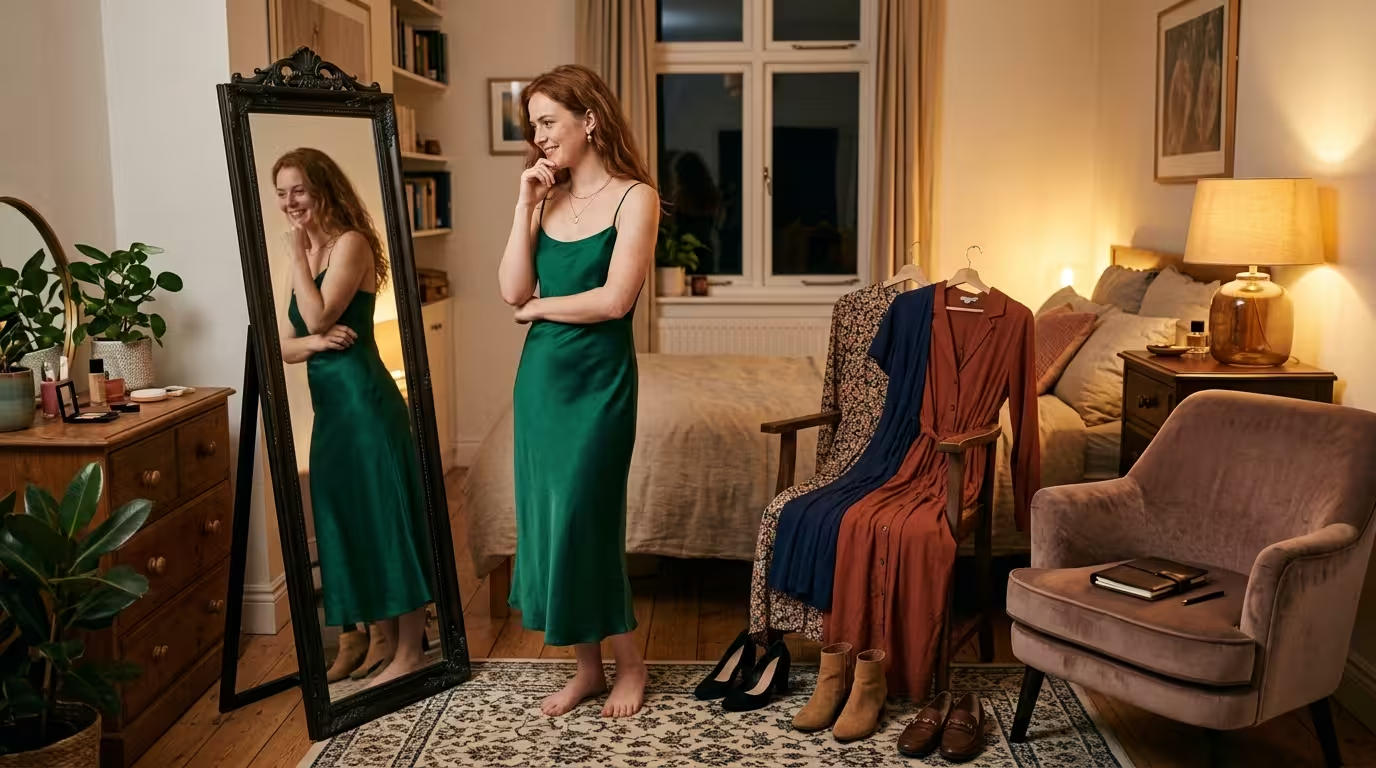
The evening before a first date looks too similar in every home: dress rehearsal, hair, makeup, mirror photos — and not one minute spent thinking about what you’ll talk about. Then the date gets decided exactly there. He’ll forget your dress within a week; the conversation is what makes him write the next day. A sugar baby in Marseille told it laughing at herself: “I rehearsed three outfits and zero topics. On our third date I asked him what he remembered from the first. It wasn’t the dress: it was our argument about a film. Three hours of wardrobe for that.” The sensible split: the look, settled in advance and with no risky debuts — our dress code guide closes that file. And the evening before, five minutes for yourself: two topics of yours you’d enjoy telling and two questions you’d enjoy asking. With that, you’re better dressed than anyone. And if getting started is the hard part, how to start conversations has the first minutes solved.
Mistake 4: Being available from minute one
The classic that kills the most second dates without anyone understanding why. You reply within seconds at any hour, accept whatever plan at whatever notice, clear your entire week just in case. You think you’re showing interest. You’re showing there’s nothing else in your life, and a man with a full world isn’t looking for someone without one. Total availability doesn’t flatter: it devalues, and it strips you of the very life of your own that made you interesting in the first place. The healthy measure: reply when it suits you, offer alternatives when you can’t (“Thursday’s impossible — Tuesday?”), and keep your plans. It isn’t tactics or games. It’s truly having a life. And letting it show.
Mistake 5: The third glass of nerves
Nobody talks about this one and it happens constantly. First date, nerves, and the wine goes down easily: the first glass relaxes, the second loosens, and the third starts deciding for you. The problems are three. You lose precision on exactly the night you most need to read the man across the table. You say what you wouldn’t say. And the image of the evening stops being the one you prepared. A sugar baby in Warsaw summed it up: “On my first first date I drank for courage. On the ones after, I drank one glass for elegance. No comparison: the one who evaluates sober chooses better.” The rule that never fails: one glass, two at most if dinner runs long, and water in between without asking permission or offering explanations. If he’s one of the good ones, he’ll notice. And he’ll like it. Full table manners live in our restaurant etiquette guide.

Mistake 6: Fixating on the first man who shows interest
The first charming man arrives, the first exciting date, and you stop the search, stop replying to others, and build the entire future on one dinner. If he then cools off, you haven’t lost a date: you’ve lost three weeks and your morale. Until something is real and spoken, keep meeting people: profile active, replies to whoever interests you, two or three conversations alive. It isn’t coldness and it isn’t playing both sides — it’s refusing to hand your whole search to someone who so far has given you nothing but one pleasant evening. When one of them becomes something real, closing the rest will take you an afternoon. Meanwhile, standing out from the rest is still your job.
Mistake 7: Stretching what isn’t moving
The mirror of the previous one. Three, four, five dates with a perfectly polite man who proposes nothing, advances nothing, makes nothing concrete — and you keep going, because it’s pleasant and because leaving feels like effort. The signs that something is going nowhere show early: if there’s no initiative from his side after the second date, there rarely is by the sixth. Knowing how to withdraw with elegance is among the most profitable skills in this world: one kind message, no reproaches, and your calendar free for the one who does. The single exception worth making: the man who won’t be your sugar daddy but will be a mentor: someone who teaches you, introduces you, opens doors. That relationship is worth keeping on its own terms. And if what has you both stalled is that neither has said what they’re looking for, that conversation has its own guide: talking about expectations with elegance.
Mistake 8: The after — days of silence or an avalanche of texts
The date ended well and now comes the invisible mistake: writing nothing for three days “so as not to seem keen”, or the opposite — the message on the way home, another on arrival, another in the morning. Both extremes tell the same wrong story: that you don’t know how to hold yourself. What works is boringly simple: one message, that night or the next morning, short, with one concrete detail from the evening (“still thinking about the sailboat story — let’s repeat”). One. And then, your life — let him answer, let him propose, let him earn the second. The single message says everything you want said: I had a good time, I know how to communicate, and I’m not glued to my phone. Exactly the woman who gets called again.

The first date is passed before you sit down
Run back through the eight and you’ll see the pattern: almost none of them happens at the table. They happen before (arriving blind, the wardrobe without conversation) or around it (the availability, the fixation, the after). The table only reveals what you brought to it. Prepare the evening before, arrive as the choice, evaluate over one glass, and say goodbye knowing the next move is his. The sugar babies who string together second dates aren’t the prettiest ones on the platform. They’re the ones who don’t sabotage themselves. When you want to put it into practice, you can create your profile and find a sugar daddy on our network — the perfect first date starts with choosing well who it’s with.
First-date mistakes: FAQ
Should I have a video call before a first date?
Yes, always. Ten minutes confirm that he exists, that the voice matches the photos and that conversation flows, and they hand you ready-made topics for the date itself. Skipping it means sitting down with a stranger and gambling the evening on luck. Pair it with the basics that never change: public place, your own way home, and your location shared with a friend — even when he seems charming. Precisely then.
How available should I be at the start?
Warm, and with a life. Reply when it suits you, accept the plans you actually want, and offer alternatives when you can’t (“Thursday’s impossible — Tuesday?”). Clearing your week and answering within seconds doesn’t read as interest; it reads as an empty life, and a man with a full world isn’t drawn to that. Your own plans aren’t an obstacle to the relationship. They’re half of what makes you worth pursuing.
How much should I drink on a first date?
One glass, two at most if dinner runs long, with water in between and no explanations offered. The first glass relaxes, the second loosens, the third starts deciding for you — and this is the one night you most need precision, both to read him well and to stay the woman you prepared to be. Drinking little also gets noticed by the men worth having, and it plays in your favour.
Should I keep talking to other men after a good first date?
Yes, until something is real and spoken out loud. One pleasant evening is not a commitment, and stopping your search over it hands your momentum to someone who hasn’t earned it yet. Keep the profile active and two or three conversations alive; it isn’t coldness, it’s sense. When one connection becomes something genuine, closing the rest takes an afternoon. Rushing to close them early can cost you weeks and morale.
When should I stop seeing someone who doesn’t move things forward?
Early. If after the second date there’s still no initiative from his side — no proposals, nothing concrete — the sixth date rarely fixes it. Withdraw with elegance: one kind message, no reproaches, calendar free for the one who does show up. The exception worth keeping is the man who becomes a mentor rather than a sugar daddy: someone who teaches you and opens doors. That bond is valuable on its own terms.
What should I write after the date?
One message, that night or the next morning: short, warm, with one concrete detail from the evening (“still thinking about the sailboat story — let’s repeat”). Then let him answer and let him propose. Days of silence read as indifference; a string of texts reads as anxiety. The single message reads as exactly what you want: a woman who enjoyed herself, communicates well and has a life to get back to.