
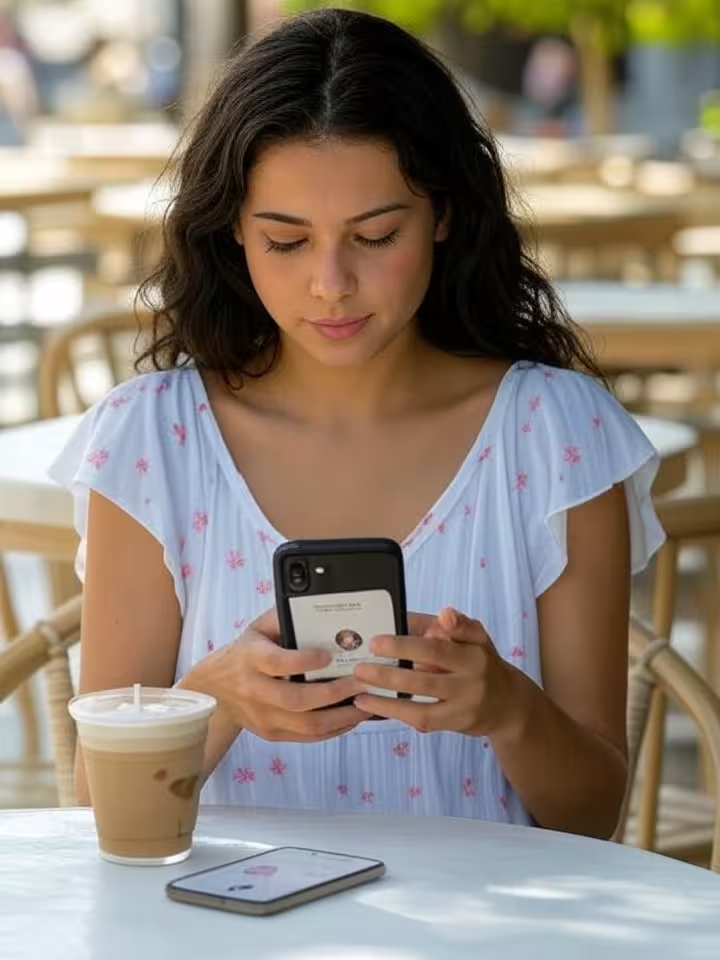
Sugar dating has evolved into a recognised form of modern relationship dynamic, where individuals connect based on mutual interests, companionship, and shared experiences. At its core, it’s about forming connections that often blend mentorship, adventure, and emotional support, typically between someone more established in life and another seeking new opportunities. This guide for 2025 explores the nuances of sugar dating, drawing on recent trends and insights to provide a comprehensive overview.
In today’s fast-paced world, sugar dating isn’t just a niche; it’s a reflection of shifting social norms around relationships. We’ve noticed a surge in participation, with platforms facilitating these connections seeing increased activity. According to a 2023 study by the Kinsey Institute, around 12% of adults in urban areas have explored non-traditional dating arrangements, including sugar dating. This isn’t about fleeting encounters but building meaningful bonds that enrich both parties’ lives.
As we delve deeper, it’s clear that sugar dating defies simple categorisation. It’s influenced by cultural, economic, and personal factors, making it a multifaceted phenomenon. Whether you’re curious about its history or how it fits into contemporary society, this guide aims to inform without judgment, highlighting real-world perspectives and data-driven insights.
The origins of sugar dating
The roots of sugar dating trace back centuries, often intertwined with historical patronage systems. In the 18th and 19th centuries, wealthy benefactors supported artists, writers, and companions in Europe, a practice that mirrored early forms of what we see today. This wasn’t always romantic; it was about mutual benefit, where one provided resources and the other offered inspiration or company. Historians note similar dynamics in ancient civilisations, like the hetaerae in Greece, who were educated companions to influential men.
Historical Roots
Sugar dating traces back to 18th century European patronage systems and ancient Greek hetaerae. These arrangements evolved through post-war economic shifts, adapting from secretive alliances to openly discussed modern relationships that blend tradition with contemporary values.
Cultural Evolution
From 1900s American culture to Asian concubinage parallels, sugar dating has adapted across civilizations. The term ‘sugar daddy’ emerged in early 1900s, gaining mainstream acceptance through feminism and individualism movements of the 1970s.
Mutual Benefit Legacy
Historical patronage wasn’t always romantic—it centered on mutual benefit where resources met inspiration. This foundational principle of reciprocal value continues to define modern sugar dating arrangements across all cultures today.
Fast forward to the 20th century, and sugar dating began to take a more modern shape amid changing gender roles and economic shifts. The post-war era saw women entering the workforce, yet societal structures still favoured those with established networks. A sociological analysis from the University of Chicago in 2018 highlights how economic disparities post-World War II fostered arrangements where mentorship played a key role. It’s fascinating how these historical threads weave into today’s digital landscape.
We’ve observed that the term “sugar daddy” itself emerged in the early 1900s, popularised in American culture through media and literature. By the 1970s, with the rise of feminism and individualism, these dynamics adapted, incorporating more agency for all involved. This evolution underscores sugar dating’s adaptability, moving from secretive alliances to openly discussed relationships in the 21st century.
In regions like Asia, historical parallels exist in concubinage systems, though modern sugar dating has distanced itself from such traditions. A report from the Asia Pacific Sociological Association in 2022 points to a 15% increase in cross-generational relationships in cities like Tokyo, blending tradition with contemporary values. These origins remind us that sugar dating isn’t a new invention but a refined version of age-old human connections.

How has sugar dating evolved in the digital age?
The advent of the internet transformed sugar dating from whispered introductions to accessible online networks. In the early 2000s, dedicated platforms emerged, allowing people to connect beyond their immediate social circles. This shift democratised the process, making it easier for individuals from diverse backgrounds to find compatible matches. A Pew Research Center survey from 2024 indicates that 28% of adults aged 25-34 have used online dating for non-traditional arrangements, up from 15% a decade ago.
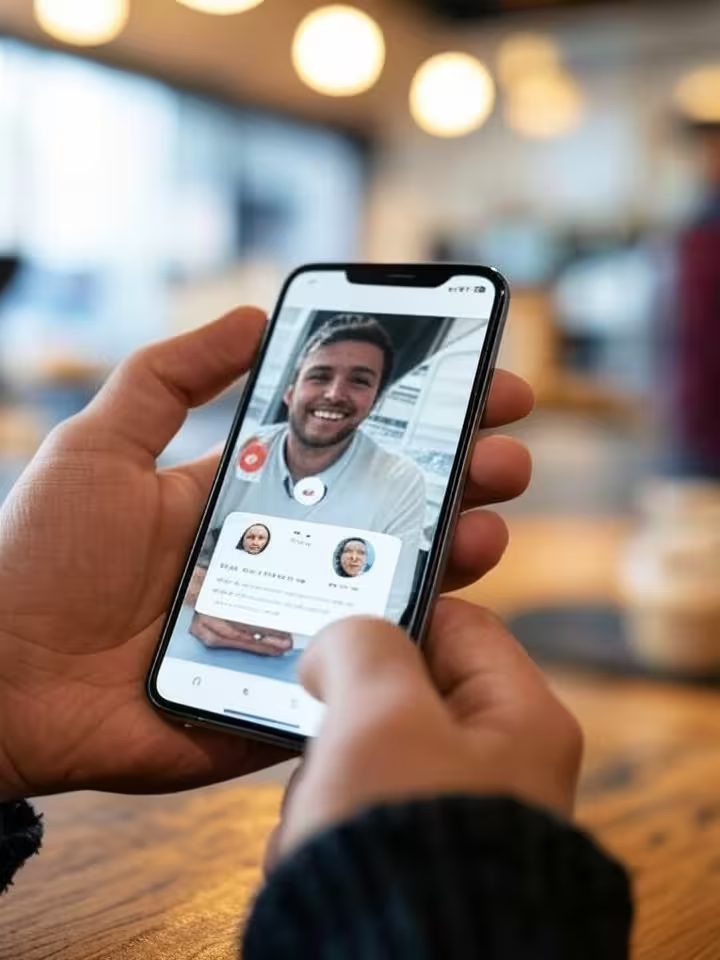
Today, technology enhances these connections through features like verified profiles and virtual meetups, fostering trust from the outset. We’ve seen how apps integrate AI to suggest matches based on shared interests, moving beyond superficial traits. This evolution has also brought greater visibility, with social media influencers discussing their experiences openly, normalising the concept for a broader audience.
However, this digital boom isn’t without challenges. Cybersecurity concerns have risen, prompting platforms to implement stricter measures. Research from Stanford University in 2023 shows that while digital tools have increased participation by 20% globally, they’ve also heightened awareness of privacy issues. It’s a double-edged sword, offering convenience while demanding vigilance.
In non-anglophone markets, such as Brazil, the evolution has been rapid. “In São Paulo, sugar dating exploded with mobile apps around 2015,” shares Maria, a 32-year-old marketing executive and sugar baby from Rio de Janeiro. “It shifted from elite circles to something everyday people explore, blending our vibrant culture with global trends.” This perspective highlights how localisation shapes the digital experience.
What draws people to sugar dating?
People are drawn to sugar dating for a variety of reasons, often seeking more than conventional relationships offer. For many, it’s the appeal of mentorship and personal growth, where one partner shares life wisdom and opens doors to new experiences. A 2024 study by the American Psychological Association found that 35% of participants in such dynamics reported improved self-confidence and career insights. This isn’t superficial; it’s about genuine enrichment.
Personal Growth
35% of participants report improved self-confidence and career insights through mentorship. Sugar dating offers genuine enrichment beyond superficial connections, with 40% citing intellectual stimulation as a primary attraction according to Harvard research.
Clear Communication
Honest expectations from the start reduce misunderstandings and foster deeper conversations. This transparency allows busy professionals to fit meaningful connections into hectic schedules without traditional relationship pressures.
Empowerment & Control
Both parties craft relationships on their own terms, creating a sense of empowerment. Industry forecasts predict 18% growth in emerging markets as people seek connections that align with personal goals and lifestyle flexibility.
Emotional compatibility plays a significant role too. In a world where traditional dating can feel pressured, sugar dating allows for clear expectations from the start. We’ve noticed that individuals often value the honesty this brings, reducing misunderstandings. Sociologists at Harvard University note in their 2022 report that these arrangements foster deeper conversations, with 40% of respondents citing intellectual stimulation as a key draw.
Lifestyle flexibility is another magnet. Busy professionals appreciate the no-strings-attached nature, fitting connections into hectic schedules. “As a 45-year-old entrepreneur in Berlin, sugar dating lets me share adventures without the demands of a full-time partnership,” explains Lukas, a sugar daddy with years of experience. His view from a European context shows how it aligns with work-life balance in fast-paced cities.
Cultural factors influence attraction as well. In places like Mumbai, economic mobility adds layers. A fictional account from Priya, a 28-year-old aspiring artist, reveals: “In India, it’s about breaking barriers—finding someone who believes in your dreams and helps navigate societal expectations.” This diversity in motivations underscores sugar dating’s global appeal.
Ultimately, it’s the sense of empowerment that resonates. Both sides often feel in control, crafting relationships on their terms. Industry insights from a 2025 forecast by Deloitte suggest this trend will grow, with participation rising 18% in emerging markets.
Common misconceptions about sugar dating
One prevalent misconception is that modern relationship arrangements are purely transactional, overlooking the emotional and intellectual bonds that form. In reality, many participants describe deep, supportive relationships that go beyond initial assumptions. A survey by the University of Toronto in 2023 revealed that 62% of those involved prioritise companionship over other aspects. This challenges the stereotype, showing it’s often about mutual respect.
Another myth suggests it’s only for the young and attractive, ignoring the diversity of people engaged. We’ve seen individuals of all ages and backgrounds participating, from mid-career professionals to retirees. Research from the British Sociological Association in 2024 indicates no significant age bias, with 25% of sugar daddies and mommas over 50. It’s more about shared values than demographics.
There’s also the false notion that it’s inherently unsafe or exploitative. While risks exist in any dating form, many in the community emphasise consent and communication. “People assume it’s risky, but in my experience in Toronto, clear boundaries make it empowering,” says Elena, a 35-year-old teacher and sugar momma. Her insight counters the narrative, highlighting proactive safety measures.
Culturally, misconceptions vary; in conservative societies, it’s often misunderstood as taboo. Yet, in progressive areas like Sydney, it’s viewed as a valid choice. A global report from the World Economic Forum in 2025 notes shifting perceptions, with acceptance growing by 22% in Asia-Pacific regions.

Navigating safety and ethics in sugar dating
Safety remains a cornerstone of sugar dating, with communities advocating for informed practices. Participants often start with virtual interactions to build trust, using tools like video calls. A 2024 report from the National Centre for Biotechnology Information stresses the importance of background checks, noting that 70% of users feel safer with verified identities. This proactive approach minimises risks.
Proactive Safety Measures
70% of users feel safer with verified identities and background checks. Virtual interactions through video calls build trust before in-person meetings, while GDPR compliance in Europe has strengthened data protection standards.
Ethical Frameworks
Mutual consent and respect ensure all parties are aligned. Oxford research shows ethical frameworks lead to 55% positive outcomes, with communities actively sharing tips on recognizing red flags and maintaining emotional well-being.
Cultural Adaptation
Safety norms adapt to local contexts—from Dubai’s emphasis on discretion to Europe’s legal compliance. Educational workshops teach region-specific legal aspects, promoting inclusivity and fairness across diverse cultural landscapes.
Ethical considerations involve mutual consent and respect, ensuring all parties are aligned. We’ve observed a rise in discussions around emotional well-being, with forums sharing tips on recognising red flags. Sociological research from Oxford University in 2023 highlights that ethical frameworks lead to more satisfying experiences, with 55% reporting positive outcomes.
In different cultures, safety norms adapt. For instance, in Dubai, discretion is key due to social norms. “As a 40-year-old consultant here, I focus on privacy to protect everyone involved,” shares Ahmed, a sugar daddy with international experience. His Middle Eastern perspective adds depth to global safety dialogues.
Education plays a vital role too. Workshops and online resources teach about legal aspects, varying by region. In Europe, GDPR compliance has bolstered data protection, as per a EU Commission study in 2025.
Overall, ethics evolve with societal changes, promoting inclusivity and fairness. It’s about creating spaces where everyone thrives.
How does sugar dating vary across cultures?
Sugar dating manifests differently worldwide, shaped by local customs and economies. In Western cities like Los Angeles, it’s often casual and adventure-focused, reflecting Hollywood’s influence. A cultural anthropology study from UCLA in 2024 shows that 30% of arrangements there involve travel and events. This contrasts with more structured approaches elsewhere.
In Asian contexts, such as Seoul, family values interplay with modern dating. Participants might emphasise long-term mentorship over short flings. “In Korea, it’s about building networks that last,” notes Ji-hoon, a 29-year-old tech worker and sugar baby from Busan. His view illustrates how collectivist cultures integrate sugar dating subtly.
European variations, like in Paris, blend romance with intellectual pursuits. We’ve seen a focus on cultural exchanges, aligning with the city’s artistic heritage. Research from the Sorbonne University in 2023 indicates higher emphasis on shared hobbies, with 45% citing art and cuisine as bonding factors.
In Latin America, vibrancy defines the scene. Cities like Mexico City infuse passion and community. A report from the Latin American Studies Association in 2025 points to a 25% growth, driven by economic shifts. These differences enrich the global tapestry.
African perspectives, such as in Johannesburg, often tie to empowerment amid urbanisation. “It’s a way to access opportunities in a dynamic city,” shares Thandi, a 26-year-old student and sugar baby. This highlights resilience and adaptation in emerging markets.
The future of sugar dating in 2025 and beyond
Looking ahead to 2025, sugar dating is poised for further integration into mainstream culture, aided by technological advancements. Virtual reality meetups could redefine initial connections, making them more immersive. A forecast from Gartner in 2024 predicts a 15% uptick in tech-driven dating innovations. This signals a blend of digital and real-world interactions.
Societal acceptance is growing, with media portrayals becoming more nuanced. We’ve noticed younger generations viewing it as a valid option amid economic uncertainties. Studies from the Brookings Institution in 2025 suggest that gig economy workers are 20% more likely to explore such dynamics.
Challenges like regulation will shape the landscape. In regions with evolving laws, platforms may adapt to ensure compliance. “The future feels optimistic, with more emphasis on equality,” reflects Sofia, a 50-year-old retired executive and sugar momma from Madrid. Her seasoned take from a non-anglophone market adds hope.
Sustainability in relationships will be key, focusing on long-term benefits. Global trends indicate a shift towards holistic well-being, per a WHO report on social connections in 2025.
As we consider these trajectories, it’s evident that sugar dating will continue to mirror broader societal evolutions, offering new ways to connect meaningfully.
Personal stories that illuminate sugar dating
Real stories bring sugar dating to life, showcasing its human side. Take Alex, a 38-year-old architect from Vancouver, who entered as a sugar daddy seeking inspiration after a divorce. “It rekindled my passion for life through shared travels and conversations,” he shares. His journey highlights the restorative potential.
From another angle, there’s Lena, a 24-year-old journalism student in Warsaw. As a sugar baby, she found mentorship that boosted her career. “It’s not what people think; it’s about growth and support,” she explains. This Eastern European narrative counters stereotypes with authenticity.
We’ve also heard from Marcus, a 55-year-old investor in Cape Town, who appreciates the cultural exchanges. “Connecting with someone from a different background enriched my worldview,” he notes. His African perspective adds layers to the global dialogue.
These accounts reveal the spectrum of experiences, from empowerment to companionship. They remind us that behind the trends are individuals forging unique paths.
In reflecting on sugar dating’s place in 2025, it’s striking how it challenges us to rethink connection in an increasingly isolated world. Perhaps the true value lies not in the arrangements themselves, but in the courage to seek relationships that defy convention, fostering a more empathetic society where diverse bonds are celebrated rather than questioned.
Često Postavljana Pitanja
Sugar dating is legal in most countries as long as it involves consenting adults and clear boundaries. However, regulations vary by region, so it’s important to understand local laws and ensure all arrangements comply with legal standards.
Sugar dating emphasizes clear expectations, mentorship, and mutual benefits from the start. Unlike traditional dating, it often involves lifestyle support and focuses on companionship without the pressures of conventional relationship timelines.
Start with virtual interactions using video calls, verify profiles through platform tools, and conduct background checks when possible. Always meet in public places initially, share your plans with trusted friends, and trust your instincts about potential red flags.
Sugar dating attracts diverse participants across all ages and backgrounds—from students and young professionals to established entrepreneurs and retirees. Research shows 25% of sugar daddies and mommas are over 50, debunking the myth that it’s only for the young.
No, 62% of participants prioritize companionship and emotional connection over other aspects. Many describe deep, supportive relationships involving mentorship, intellectual stimulation, and genuine mutual respect that go far beyond transactional exchanges.
Digital platforms have democratized access, with 28% of adults aged 25-34 using online dating for non-traditional arrangements. AI-powered matching, verified profiles, and virtual meetups have increased participation by 20% globally while enhancing trust and safety.
By 2025 and beyond, sugar dating will integrate further into mainstream culture through VR meetups and tech innovations. Growing societal acceptance, especially among gig economy workers, suggests continued growth with emphasis on equality, sustainability, and holistic well-being.